


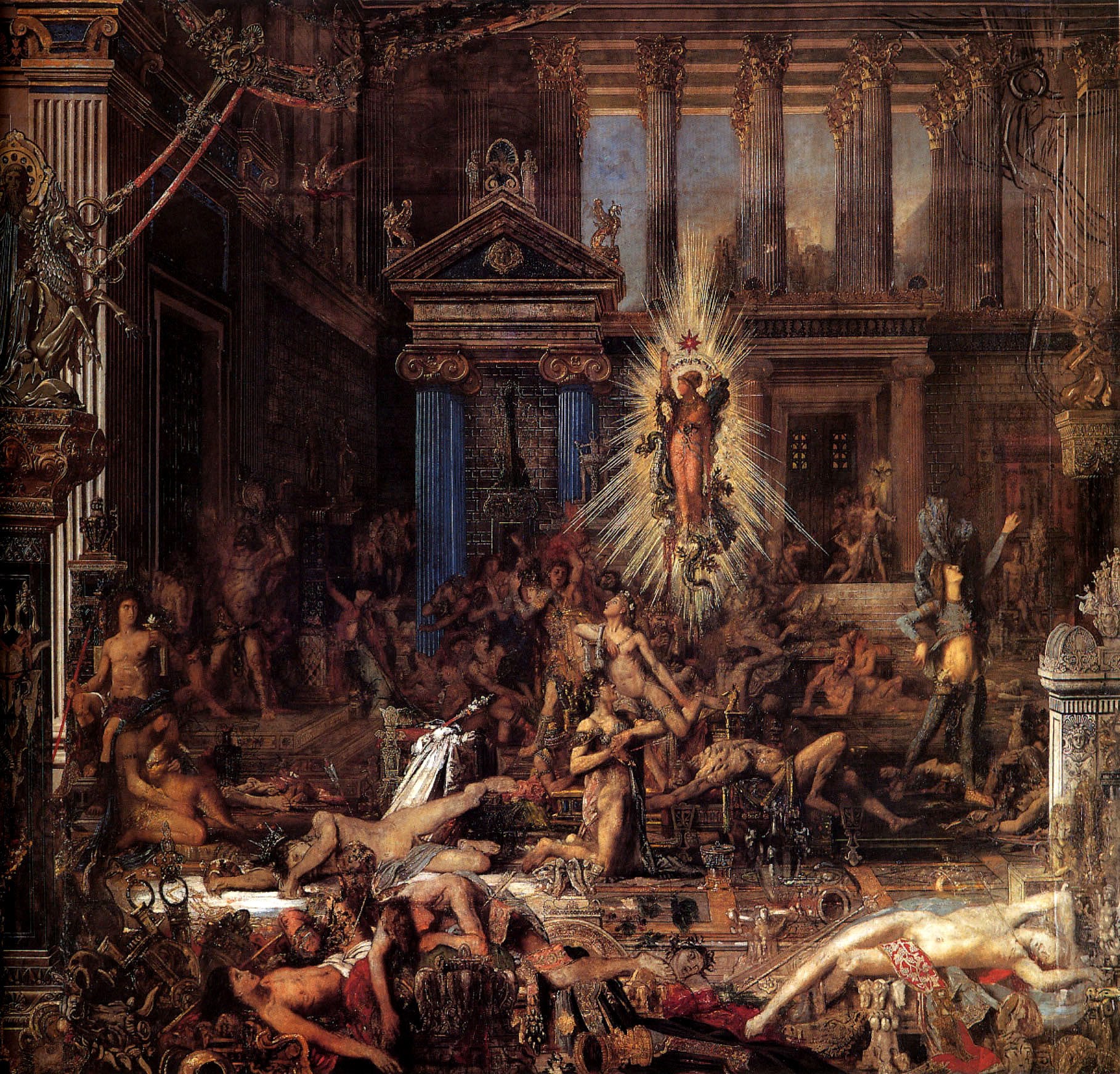
A college acquaintance of mine, and a trainee officer in the army, once told me he had always found something ideologically suspicious about The Odyssey. Why on earth would you glorify a hero who leaves for a war with all his troops and somehow returns alone? The poignancy of it is at work in the wonderful poem of Y. Chouliaris, entitled ‘Fast Food Classics’:
The Iliad: They went away.
The Odyssey: He came back.
We have a joke and an anti-war poem at once, the comic and tragic combined. Freud would tell us our laughter is released by the vast psychic expenditure we save from slogging through 48 books. Phew. But the tragedy comes in the pithiness of ‘he came back’, which links time saved to the vast loss of human life, not just in the Trojan War, but in Odysseus’ return too: the deaths at Troy, the deaths on the way home, all sandwiched between the plural ‘they’ and singular ‘he’.
The first word of The Odyssey, the singular male subject andra, has had plenty of commentary. But rather than repeat the well-worn ideas of Odysseus as ‘everyman’, as somehow representing more than himself, the ideal Greek family man at the center of civilization, Chouliaris’ poem contrasts this ‘complicated’, ‘many-masked’ man’s life story with the tales of multiple other deaths. Odysseus wins center stage at the cost of so many others who have disappeared - or been disappeared. By him.
And it’s not just his incompetence as a commander. He ‘loses/destroys’ his men, but then returns home to kill the rest of the young adult male population. If the poem does eventually stop the slaughter, it is only because the imminent murder of the rest of the Ithacan men in the poem’s final book, the relatives of both the suitors and those who died at Troy, is halted by an intervention of Athena. The Odyssey flirts with genocide every bit as much as The Iliad.
This complicates the poem as a poem of remembrance and nostalgia. Odysseus remembers a version of his life on Ithaca, a rigid and organized worldview of what an oikos is, what a man is, a husband, a son, a wife, a dog. And he imposes it, with great violence, on the existing community that springs up in his absence. This isn’t easily done, and the complexities of each recognition scene, the way Odysseus both persuades and imposes particular relationships onto his wife, his son, his slaves, give us a window into what we could call the dominant norms of the world of Odysseus: what it means to be a father, a son, a husband, a master in this culture, or his fantasy of his own culture. But if his successful return is linked to this active remembering, a kind of imposed nostalgia on Ithacan life, the price to be paid is that everyone else on Ithaca, the relatives of Odysseus’ victims, must forget. Zeus tells Athena of the kind of peace he will impose.
ἡμεῖς δ᾽ αὖ παίδων τε κασιγνήτων τε φόνοιο
ἔκλησιν θέωμεν: τοὶ δ᾽ ἀλλήλους φιλεόντων
ὡς τὸ πάρος, πλοῦτος δὲ καὶ εἰρήνη ἅλις ἔστω. (24.484-6)

Let us make them forget the murder of their children
Their brothers; let them love each other
As before, and let there be wealth and peace in abundance.
Zeus’ plan answers an obvious problem. If the adult Ithacans are not killed, how can they live with the killers of their loved ones? The solution: Odysseus and his household will remember the violence, and everyone else must forget. And for those attuned to the puzzling mythic stories embedded in books 9-12 of the poem, we have a Siren song here. Odysseus’ response to the deadliness of the Sirens’ song is to find a way to listen, even as his men cannot. Here, in our Ithacan endgame, the ruler remembers, and the gods plug up the ears of the ruled. This early version of the ‘deus ex machina’ phenomenon emphasizes a problem lurking throughout the entire poem: what about the deaths of the many? This solution recognizes the depths of the social impasse between Odysseus and the other Ithacans by wishing it away. At the moment the Ithacans start to wake up to Odysseus’ destruction, they get put to sleep.

The narrator’s voice does try to deal with this embarrassment. Yes, Odysseus’ men died, but it was their fault. They died ‘by their own recklessness’ because they ate the cattle of the sun. (Od 1.7ff) The trouble is that this is only one story involving the loss of the men - others, as Odysseus’ own account confirms, die very much because of him, most obviously those who died in the Cyclops’ cave. Even the poet’s summary of the eating of the Cattle of the Sun is egregiously misleading: the companions have every reason to believe their choice is between eating the cattle and dying of hunger. How are we to explain this?
As Paul Cartledge has argued on the IMR pages, the poem is familiar with unreliable narrators: it’s a tag he gives to the liar Odysseus, fabricator of fantastic tales in Books 9-12. But why not indict the poet? From the opening lines on, the poet is in defensive mode, taking the hero’s side of the story, as if the poet, along with the Muses, is Odysseus’ PR agent. As tales of death mount, the poet’s job is to stick to the talking points, the story that has beguiled so many: good Odysseus vs bad suitors, one good man returning to restore a household to its proper status, of a husband winning back a loyal wife, even as The Odyssey, over and over again, shows us how partial and unreliable a version of the story this is.
One way of focusing on The Odyssey’s darker side is to look at a recent work that systematically ignores it. Stephen Fry’s prose retelling of The Odyssey, the last in a series of books cataloguing and occasionally interpreting Greek myths, turns the poem into a simple adventure story suitable for children. The poem has predictable good guys and bad guys, and we rejoice when the bad guys get it. But that makes the oversimplifications all the more instructive. Fry is strictly ‘team Odysseus’, ready to give the benefit of every doubt to Odysseus, to find lurking evil intentions behind every act of his enemies, and mostly to pass over in silence the parts (say, the killing by Telemachus of the maidservants) that are too unsavory to mention. Let me offer one example, which will also offer a useful contrast to what Christopher Nolan’s recent film has done with this theme of cosmic destruction.
The poem’s final, near bloodbath is previewed by the fate of the Phaeacians at the start of the poem’s second half. Because they have conveyed Odysseus home, Poseidon, enraged at the harm done to his son Polyphemus, conspires with Zeus to punish them, to make them remember their wrongdoing forever, just as Athena conspires with Zeus to make the Ithacans forget. The punishment is double: first, the ship that transported Odysseus from Scheria is turned to stone on its return, making this nation of infallible sailors aware that their future sea travel will entail deadly risks. It memorializes their error. But more importantly, the two gods debate whether to obliterate their entire civilization by piling a mountain onto their world. No ordinary punishment this, and one that we can correctly call existential; it would destroy not only their biological existence, but their symbolic existence too. The Phaeacians would simply disappear. How does Fry deal with this? The turning of the ship to stone is recounted, and immediately blamed on an over-vengeful Poseidon alone, and the final threat of obliteration is simply ignored. As for the end of the poem, Fry ends with Odysseus happily at home, reconciled with Penelope, his son happily telling Eurycleia that he’s ‘home now.’
I find Fry’s strange mixture of playing down the full impact of Odysseus’ killing, while rejoicing in the violence against the suitors, as he greatly exaggerates their crimes beyond even Odysseus’ rhetoric, deeply disturbing. The suitors are ‘scum’, ‘piss in the halls’, ‘rats’ and ‘rapists.’ It reads as ‘atrocity propaganda’: because the suitors are the villains, and will be killed in an ugly, deeply unheroic way, they must be rapists, scum, rats. That’s why they deserve it. Their actual crimes are irrelevant. Of course, Fry is channeling what he believes is Odysseus’ aristocratic disdain. He is, if you like, simply getting into Odysseus’ character. But one can’t shake the feeling that we’re meant to be enjoying all this melodrama, and that he is too. Just as important, it leans on the historicist idea that some univocal version of Greek culture would have sided with Odysseus, and that exulting in his violence is the only reading the poem permits.
But Odysseus is already in The Iliad Homer’s great war criminal, the man who delights in killing unnamed Thracians in their sleep in Iliad 10. And as I have tried to show, the poem’s narrator is aware from the start of the need to whitewash his crimes, his lurking scandal. The Odyssey is, indeed, an adventure story, a story of return, a recovery of one man’s household. It is also a story of buried guilt. It puts on display its uneasy awareness of the immense violence performed in establishing its dominant norms.
This, finally, brings us back to Christopher Nolan, and why I find the central message of his film so compelling. Nolan, much as Fry does, gives us a simplified return home to Ithaca, and ‘Odysseus against the suitors’ plays out as good versus evil. But the context is crucial. Nolan’s Odysseus is guilty to the core, haunted by his awareness that from Troy on, his entire culture is fatefully compromised, untrue to its own laws, and that he, far from an exception, symbolizes this cultural failure. Classicists have been quick to bemoan the absence of the Phaecians in Nolan’s movie, that there is no Nausicaa or Arete. But, whether knowingly or not, the essence of the Phaeacian narrative is the heart of the film. A mountain of possible oblivion hangs over Odysseus’ world. The killing of the suitors is more this civilization’s last act than any purifying violence of redemption. The ‘new’ Odysseus is the one who sails away and promises to atone.
Mark Buchan is the Editor of In Medias Res.
Interesting. You and I should play a game of *The Odyssey*. Here are the rules: ships are black; Dawn has rosy fingers; hospitality can decide whether players survive or meet some nasty fate; Penelope keeps people guessing. Odysseus always survives. Etc.
You tell the Kikones bit. Make the audience feel that they are with those men raiding those Thracians! Add your own flavor, but keep the basic narrative events.
Then I’ll tell the Cyclops’s Cave: “…and then he feasted the lamb and ate the guest! Hahaha! He got it right-way-round!”
We’ll go back and forth, and the audience will judge the winner.
We’re two rhapsodes spinning yarns. Neither of us gets to settle an interpretation merely by announcing “unreliable narrator” or “hidden guilt.” Make it work in the telling—and show what in the inherited tale supports it.
The dead have died before and will die again in future tellings. Some get lamentations; others scarcely get a second glance. Think stormtroopers and redshirts, though Homer sometimes makes us linger.
If you hear condemnation of the raid, remorse for its victims, or anxiety about disrespecting foreigners, show me where. The tale gives us grief, judgments, and disastrous consequences. Which of those supports your particular moral reading?
Bring that reading to the performance. Let’s hear what it does.
Cheers!